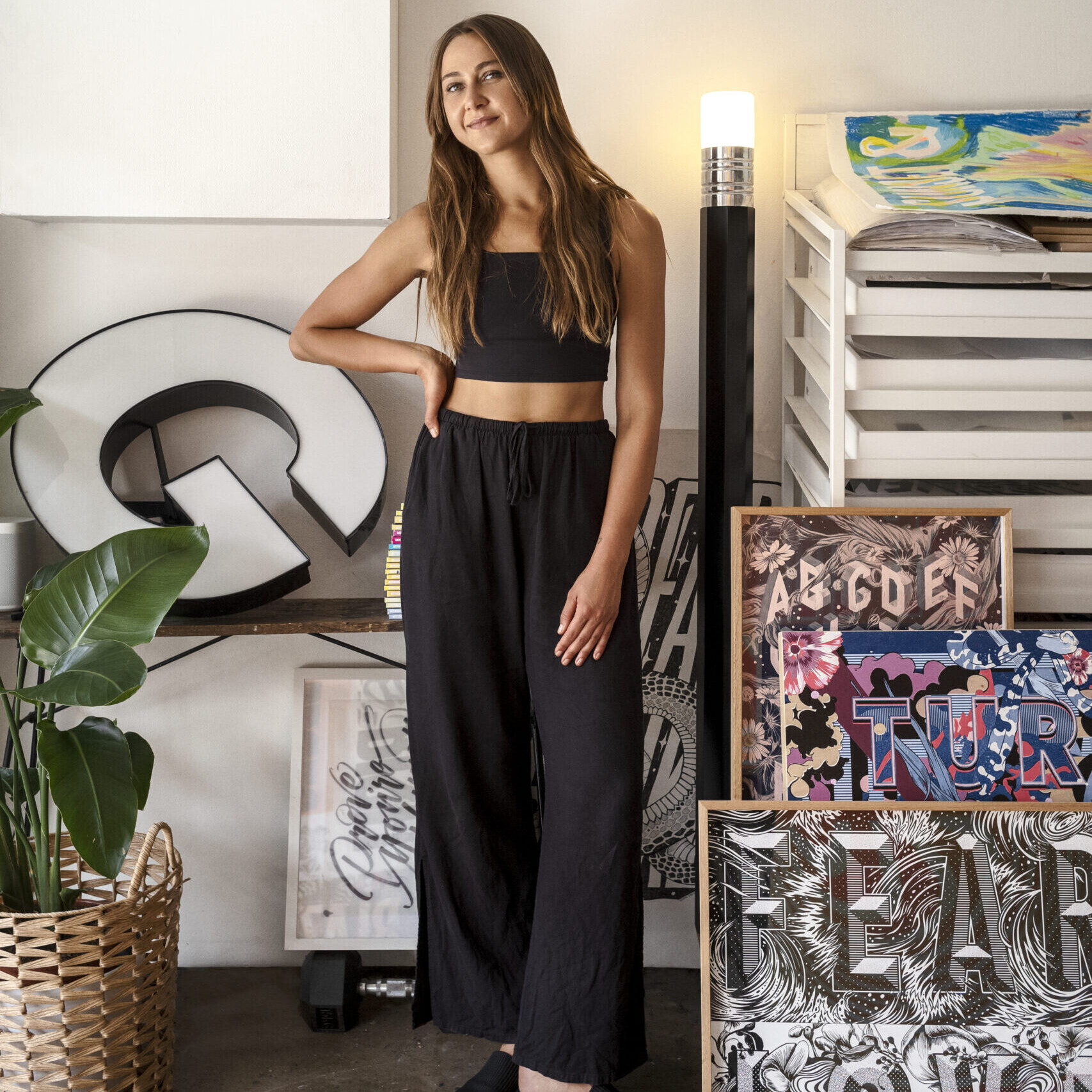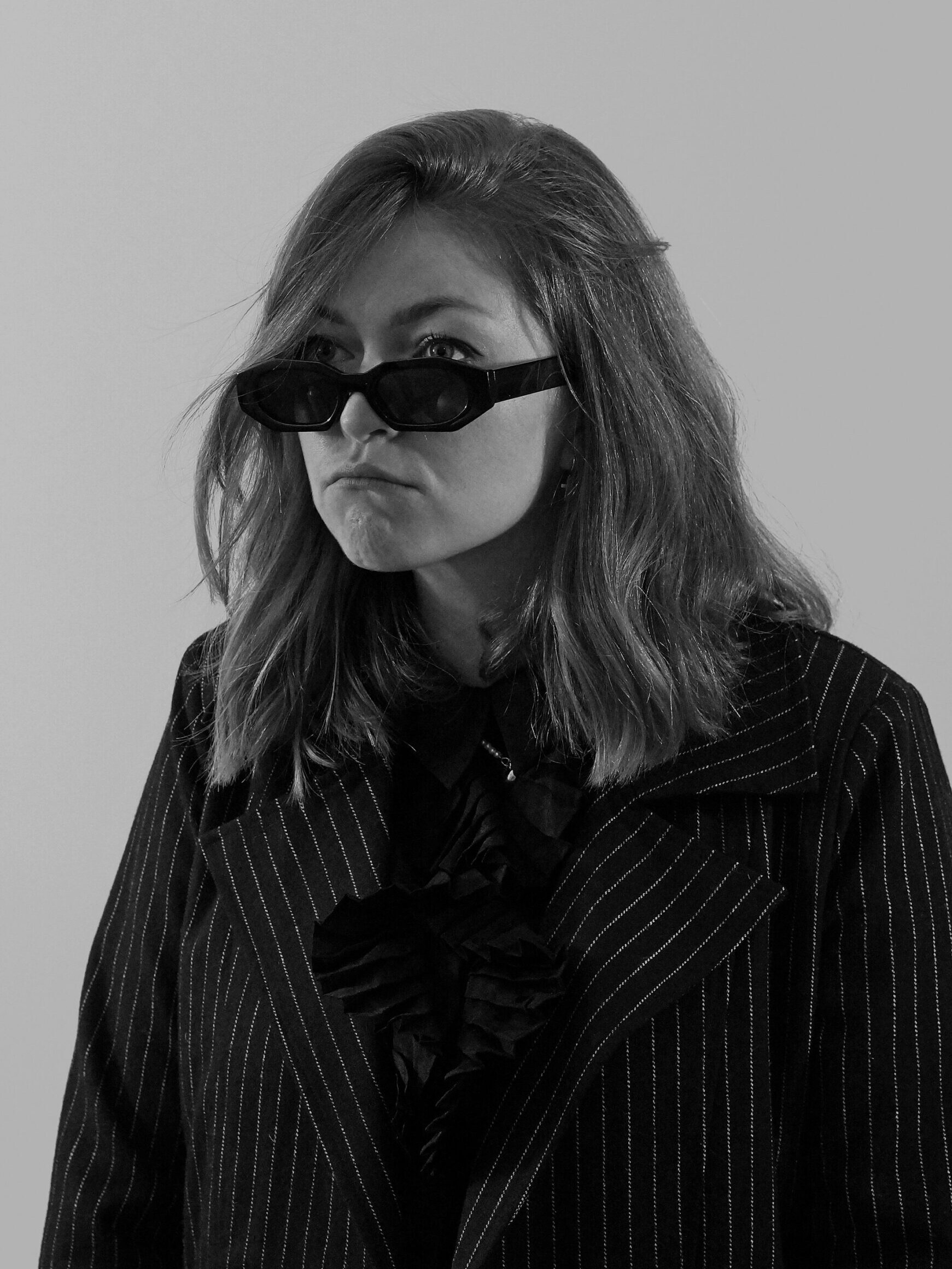


ABOUT GEMMA O'BRIENGemma O'Brien is an Australian artist and designer based in Sydney, known for her hand lettering, typography, large-scale murals, and fine art. She began in law before moving into design and typography, built an international career through speaking and commissions, and more recently studied neuroaesthetics, the neuroscience and psychology of art.
Tune in wherever you get your podcasts /
Tune in wherever you get your podcasts /



Episode Description
Gemma O’Brien describes flow as a forgetting of yourself. Fully absorbed, at one with the work, losing your sense of time.
What I did not expect was where the conversation went from there. Because the second half of this is about boredom, and it is the sharper half.
This is Second Take, a short format on the show. One idea, one guest, lifted out of a longer conversation. You do not need to have heard the original.
It arrives by surprise
Gemma is clear that flow does not come on demand. It turns up once she is far enough into the process that the early steps are behind her, but the work still has the right amount of resistance left in it.
She draws a line I found useful. Painting a mural where the design is finished and she is filling in outlines is not flow. She can put on an audiobook and half disengage. Flow is the part where she is actively figuring something out. Painting a gradient she has not painted before. Life drawing, where she has to look, translate and draw all at once.
Effortless, but still engaged. Those two things at the same time.
She contrasts it with scrolling on your phone, which is also escape, but without any sense of agency or control. That distinction is worth sitting with, because both feel like time disappearing and only one of them gives you anything back.
The night she stayed up late
She mentions an evening not long before we spoke where she stayed up far later than usual, drawing letterforms for a calligraphy project. Just a pencil. Nothing complicated.
She is not certain it was flow. What she is certain of is that it was the closest she had come in a long time to being properly engaged, with nothing pulling at her.
Her point about distraction is the one I keep returning to. Focus feels so sought after now because it is so easy to lose, which means you have to build the conditions for it deliberately. And she thinks that might be harder than we realise.
“This is supposed to be my passion”
Then I asked whether she ever gets bored of what she does.
Her answer was a hundred percent yes.
She describes a period a few years ago, working out what the next phase of her career should be, when she was unaccepting of the boring parts. The logic being: this is my passion, so all of it should be fun.
She is specific about which parts are dull. Liaising with clients. Email. Admin. And inside the creative work too. Round one of an idea is open and alive, sketching, seeking, sharing. Then comes the middle phase of small tweaks and colour changes, and that part can drag.
The line that reframes it
She has made peace with that. Her reasoning is that boredom is in everything, and if it were all sunshine and daisies there would be no contrast.
Then she goes further, and this is the part I would underline:
Getting good at the boring parts, finding ways to do them, is itself part of the creative expertise.
That runs against most of what creative people are told. The usual script is that if you follow the thing you love, the work stops feeling like work. Gemma is saying something more useful and less comfortable. The dull stretches are not a sign you chose wrong. Handling them well is a skill, and it sits inside the craft rather than beside it.
Why she works across so many things
This connects to how she structures her days.
Gemma describes herself as a bodily person, which is part of why she started painting murals. She noticed that a long block of purely computer-based work was ergonomically the same one thing over and over.
So she moves. Outside to read a paper. Admin on a park bench. Back inside to paint, or to do calligraphy. Shifting between them keeps her physically alive rather than stagnant, and keeps her attention on whatever is in front of her.
There is a practical detail buried in here too. She noticed how easy it is to get lost in a process that is not quite flow, just tinkering with no real progression. Her fix is a time limit, a 45 or 90 minute window, which pushes her to precise work and a solution, and lets her come back with fresh eyes rather than overcooking it.
She admits she looks at artists who hone in on one thing and wonders what that would be like. But she knows her own personality now, and she likes a harmony of things running at once. So she is staying on that path, and adding nothing new for a while.
Why this one
I picked this because of the turn in the middle.
It starts as a lovely description of the best feeling in creative work. It ends somewhere more useful, which is that the best feeling is not most of the job, and getting good at the rest of it is the actual craft.
Gemma O’Brien describes it as a forgetting of yourself. You are fully absorbed, at one with what you are doing, and you lose your sense of time. Crucially, it feels effortless while you are still actively engaged, rather than zoned out.
In Gemma’s experience it arrives by surprise rather than on demand, and usually once the early steps of a project are done but the work still holds enough challenge that you cannot switch off. She also stresses removing distraction, and says the conditions for flow now have to be built deliberately.
Yes. Gemma is direct that boredom is a hundred percent part of it, naming admin, client emails and the middle phase of a project where the work is small tweaks and colour changes. Her view is that getting good at those parts is itself part of creative expertise.
Gemma O’Brien is an Australian artist and letterer known for large scale hand-painted murals, lettering and typographic work. She works across murals, calligraphy, illustration and design, and has spoken and taught widely on lettering and creative practice.
Second Take is a short format on Captn OffScript. Each one lifts a single idea out of a longer conversation and runs it on its own, usually between five and fifteen minutes. No prior listening needed.